 WhatsApp
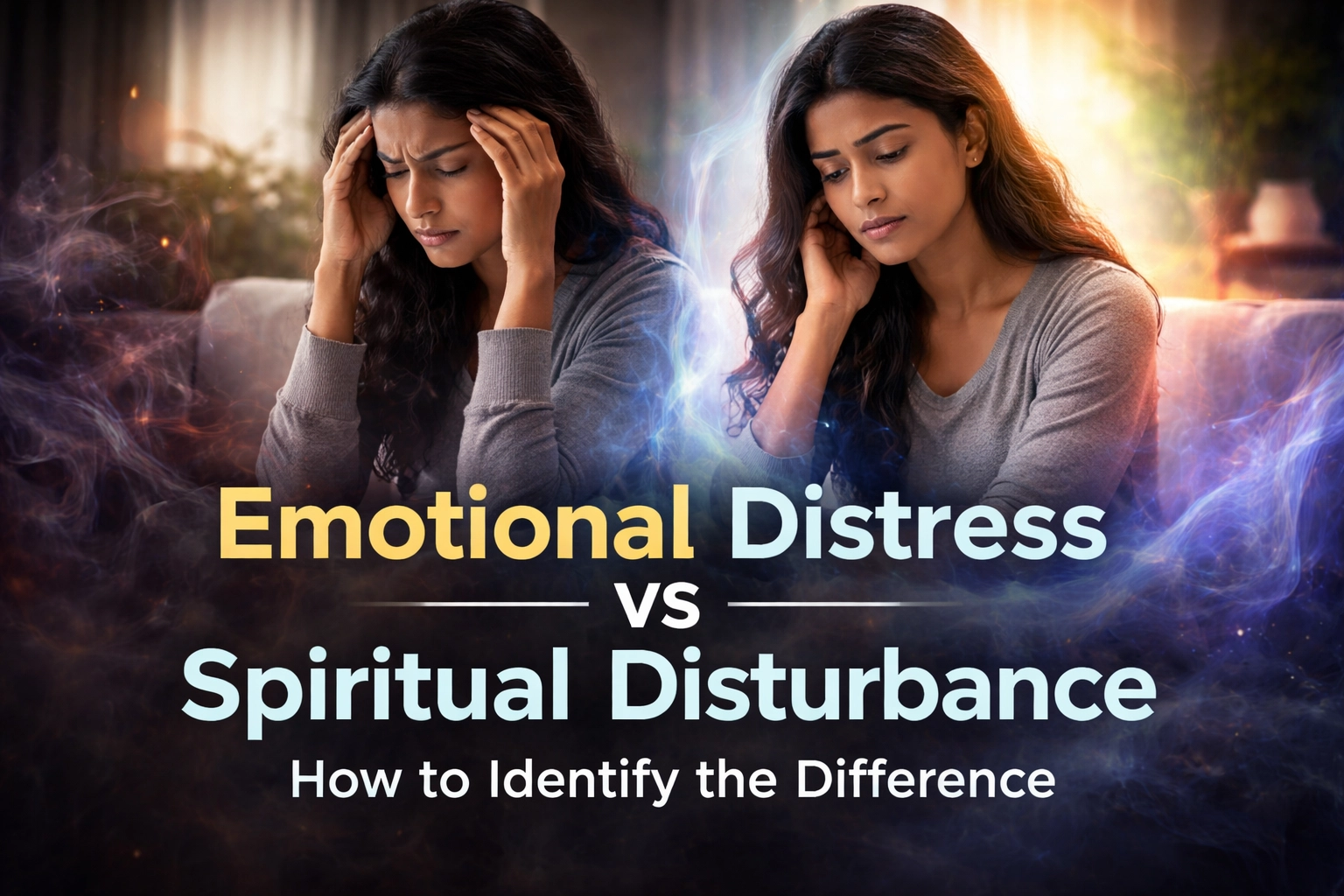
n today’s fast-paced and emotionally demanding world, many people find themselves experiencing sudden anxiety, fear, negative thoughts, or unexplained disturbances in their lives. In such moments, a common question arises — is this emotional distress, or is it something deeper, like a spiritual disturbance?
This confusion is natural. While emotional distress is a well-understood psychological condition, spiritual disturbances are often misunderstood, exaggerated, or dismissed entirely. The truth lies in understanding both with clarity and balance.
Recognizing the difference is essential — not only to avoid unnecessary fear but also to seek the right kind of help at the right time.
What is Emotional Distress?
Emotional distress refers to a state of mental or emotional suffering caused by life circumstances, internal conflicts, or psychological conditions.
It may arise from:
- Stress at work or in relationships
- Financial pressure
- Trauma or past experiences
- Anxiety disorders or depression
In such cases, the mind reacts to pressure by creating fear, overthinking, restlessness, or even physical symptoms like palpitations and sleeplessness.
Emotional distress is real, powerful, and often overwhelming — but it originates within the psychological and neurological framework of the human mind.
What is Spiritual Disturbance?
A spiritual disturbance, on the other hand, is believed to involve external negative influences affecting a person’s energy field or consciousness.
These may include:
- Persistent unexplained negativity
- Sudden behavioral changes without clear reason
- Feeling energetically drained despite rest
- A sense of heaviness or presence
However, it is important to approach this concept responsibly. Not every unexplained experience is spiritual in nature. Many people mistakenly attribute psychological symptoms to black magic and spiritual influence, which can increase fear and delay proper treatment.
Common Signs of Emotional Distress
Understanding emotional distress helps prevent misinterpretation. Some common signs include:
- Constant worry or overthinking
- Panic attacks or sudden fear
- Sleep disturbances
- Lack of focus and clarity
- Mood swings or irritability
- Physical symptoms without medical cause
These signs are often linked to anxiety or stress-related conditions. In fact, many individuals unknowingly mistake anxiety for black magic, especially when symptoms feel intense or unfamiliar.
Signs That May Indicate Spiritual Disturbance
While rare, certain patterns may require deeper observation:
- Repeated negative events without logical explanation
- Strong aversion to spiritual or religious environments (in specific cases)
- Feeling of external interference rather than internal anxiety
- Sudden personality shifts not linked to psychological triggers
Even in such cases, one must proceed carefully. A responsible approach always begins with ruling out psychological and medical causes before considering spiritual explanations.
Key Differences You Should Understand
| Emotional Distress | Spiritual Disturbance |
|---|---|
| Originates within the mind | Believed to come from external influence |
| Linked to stress, trauma, or anxiety | Associated with unexplained external patterns |
| Responds to therapy and counseling | Requires spiritual assessment (if genuine) |
| Common and scientifically recognized | Rare and often misunderstood |
The key difference lies in origin and response to treatment.
When to Seek Psychological Help
You should consider professional psychological help if:
- Symptoms are persistent and worsening
- Anxiety interferes with daily life
- There is a history of stress or trauma
- Medical symptoms appear without diagnosis
Ignoring emotional distress and labeling it incorrectly can delay healing.
When to Seek Spiritual Guidance
Spiritual guidance may be considered when:
- Psychological and medical evaluations show no clear cause
- Patterns feel externally influenced rather than internally generated
- There is a consistent and unexplained disruption in life
Even then, guidance should come from someone experienced, responsible, and grounded — not fear-driven or commercially motivated.
Final Thoughts: Balance Between Mind and Energy
The line between emotional distress and spiritual disturbance is often blurred — not because they are the same, but because human experience is complex.
Fear arises when there is confusion.
Clarity comes from understanding.
Not everything negative is caused by external forces, and not everything unexplained is a myth. The key is to remain balanced, aware, and rational while staying open to deeper dimensions of experience.
True healing begins when we stop reacting with fear and start responding with understanding.
Conclusion
If you are going through a difficult phase, take a step back and observe. Seek the right help — whether psychological or spiritual — based on clarity, not assumption.
Because in most cases, the mind needs calm before the soul needs healing.